
Building the Beloved Community Through Pickleball
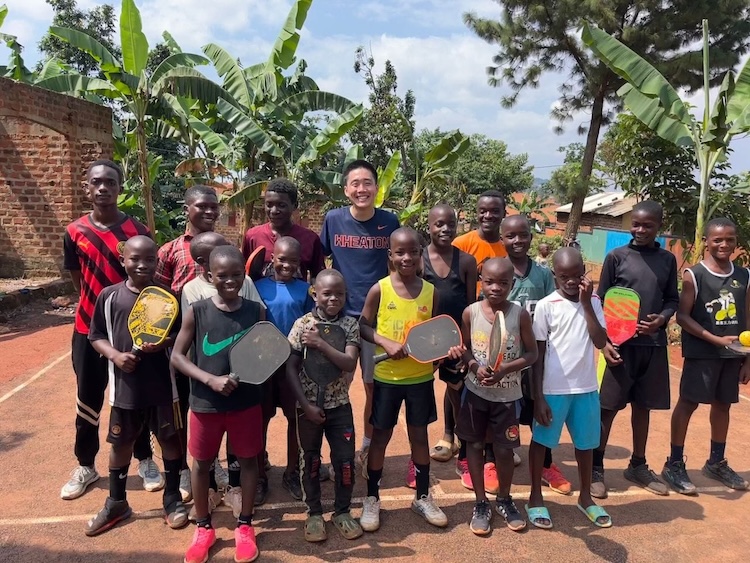
There are pickleball players and groups throughout the world utilizing this sport in a way that elevates lives. It is truly incredible how this sport has taken hold and is changing and elevating lives. From the front lines in Ukraine to the streets of Cuba and from assisted living communities in Brazil to the townships of South Africa, and many in between.
Why has it taken hold? Accessibility. Playfulness. Community. A sense of belonging.
I am a pickleball coach and player, and Level 1 Kingian Nonviolence Reconciliation Trainer. I see enormous potential for pickleball to bring people together, build bridges, and break down barriers. I believe pickleball is a vehicle toward creating the peaceful community.
I offer the idea of teaching and embracing the Six Principles of Kingian Nonviolence through pickleball!
Kingian Nonviolence Reconciliation is a way of life that approaches conflict through the lens of Reverend Dr. Martin Luther King, Jr. Reconciliation means achieving a win-win situation. By putting oneself in another person’s shoes and doubting your first impressions, one leads from a place of love, with the goal to not cause harm.
The definition of violence, according to the Kingian methodology is defined in four words: physical, mental, spiritual harm.
There are six principles of nonviolence, known as the will. These were synthesized from Dr. King’s book Stride Toward Freedom, specifically from the chapter entitled Pilgrimage to Nonviolence. The book documents Dr. King’s reflections and insights gained from his work during the Montgomery bus boycott, his entry point in 1955 as a leader of the Civil Rights Movement.
As this game is now played throughout the world, it is becoming accessible to people of all ages and walks of life. Camaraderie that takes place on the court through working together translates to off the court interaction. The sport lends itself to multi-generational connection; it is enjoyed by young and elder alike, playing on the same team.
The Second Principle, for example: The Beloved Community is the Framework for the Future holds a key to this potential. The principle describes how the means must justify the end. Peace is not achieved through violence. Violence begets violence. The way to just peace is through maintaining care for others while applying aggression toward the problem. It may require active resistance such as boycotts and noncooperation with unjust laws, with the goal to bring people together in negotiation toward developing a win-win solution.
In pickleball, people rotate in, constantly changing up the “teams” of two, so that at once a person may play against someone who then becomes a doubles partner for the next game. It is a sport that lends itself to building friendships, on and off the court.
Below are some initial thoughts on the Six Principles of Kingian Nonviolence and pickleball connection with the goal that these can be built upon as the game is played.
Principle #1: Nonviolence is a way of life for courageous people.
It often takes getting over fear of the unknown to play with others who may be unfamiliar or from different life perspective. Differing opinions or ways of playing the middle of the court can cause conflict. In life, it is about finding creative ways to better understanding rather than hurtful comments or argument. To stand up for and do what is right often requires courage.
Principle #2: The beloved community is the goal for the future.
There is a sense to encourage one another on the courts – a “mistake” is looked at as “good effort” and praised as such, thus building upon positive communication and reinforcement. This relates to an important aspect of Kingian nonviolence: the love force described by Ghandhi known as “Satyagraha”. Satya is truth which equals love, and agraha is force.
Agape love is a love for the divine within each of us. Finding ways to accept one’s own mistakes and a partner’s, allows for positive communication, uplifting interaction where everyone is appreciated and valued for their part in the whole.
Principle #3: Attack the forces of evil, not the person doing evil.
Attack problems, not people. When energy is put toward solving the problem versus attacking a person, things get done! People play together who may otherwise not choose to associate or have difference of opinion. Playing together brings a level of care toward the persons, focusing on working together toward mutual goal of playing well as a team. Simultaneously, recognizing and appreciating the opponent’s efforts.
During the civil rights movement, this principle was at the core, to be able to keep moving forward, despite how difficult, with eyes on the prize, and knowing that nonviolence is one’s greatest weapon to achieve true and lasting change.
Calling shots that are out when it is a close call means having integrity and looking out for your own team as well as your opponent in a way that promotes fairness and honesty.
Principle #5: Avoid internal violence of the spirit as well as external physical violence.
Negative self-talk is very common. Building that love from within and expressing to others isa. Key to living one’s best version. While conflict is normal, it can escalate quickly to result in violence, whether emotional harm or at the physical level.
Pickleball is played in a spirit of fun. Put ups, not put downs, are the way to play well. Learn to be kind to oneself and others for effort. Move on from errors to stay present and be in the moment, focusing on the ball and play, letting go of outside world problems. Letting go of past “mistakes” is important as the next point happens and the game continues. Recognize new opportunities as they arise.
Principle #6: The Universe is on the side of justice.
While the moral arch of the Universe is long, it bends toward justice.
Nature is a great teacher for this. Water can be destructive during storms but is essential for life. Fire can keep us warm, cook our food, but also causes destruction.
Nature seeks balance, to be in a state of homeostasis, and whatever harm is caused, over time, will right itself.
In pickleball, we take what is and go with it. Responding in real time. We can only know what we know and act from that awareness. Once we know something new, we then can then act with that new understanding. Allow each new point to unfold as it does, be present to respond and remain attentive to the game, one’s partner. Trust oneself, one’s partner, and the process. Remember to breathe.
Imagine being in a world where we lead from a place of love. On a path to find balance, for the inner journey and the outer journey. Oh, the place we go! Thank you for reading.
I have a vision: that every pickleball player (and anyone who wants) throughout the world contribute something each year, no matter the amount, to support valuable causes.
I have a first project:
Please join me in supporting the Carpe Dink’em Giving Club to raise 10K to build a borehole well in Bulanga, Uganda to support the DreamTeam Pickleball Academy.
Join Carpe Dink’em Giving Cub in partnership with Call to Care Uganda to bring clean accessible water to save and improve lives.
002 Let’s do this! PICKLEBALL FOR WATER
(fundraising page for donations)


